Task Force Beowulf
Building a battlegroup for Wargame: AirLand Battle
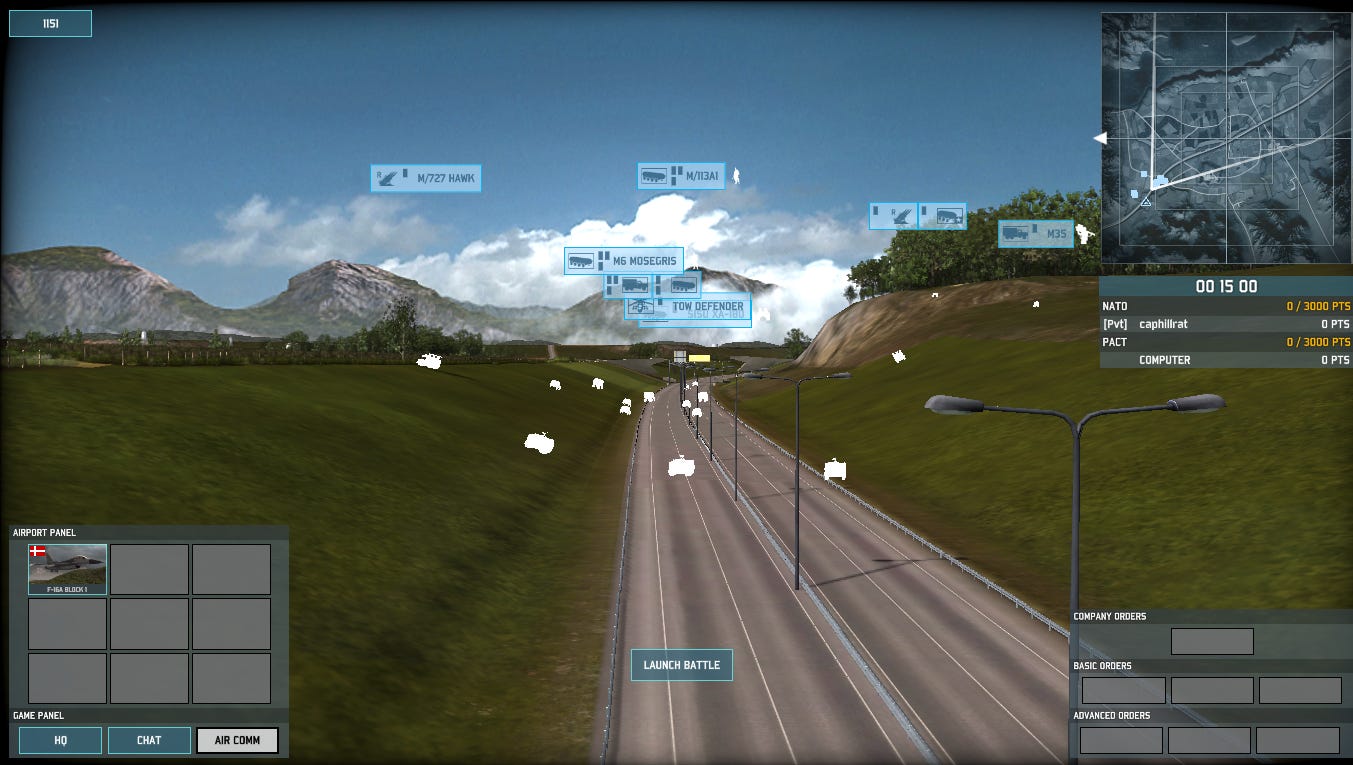
“Highway into Oslo.”
World War III, Day 16: It is 1985 and the war between the Warsaw Pact and Nato has spilled into Scandinavia. While Soviet armored columns have overrun the Fulda Gap, British and West German units have turned the Pact columns back in northern Germany, a surprise to planners on both sides of the battlefield.
In an attempt to flank this stronger than expected defensive line, Soviet planners have accelerated their timetable to invade Norway, dropping two Soviet airborne divisions in and around Oslo, surprising and quickly sweeping away the Norwegian defenses there.
As the Soviets are reinforcing their forward elements in Norway, a Danish, American Task Force named “Beowulf” has been formed to relieve the pressure on Norway’s beleaguered forces, which are regrouping in the western part of the country. After crossing the Baltic under heavy air cover, TF Beowulf, led by a Norwegian reconnaissance unit, is ready to counterattack up the E6 highway into Oslo.
The Deck
This battlegroup, made years ago, was my first foray into building a deck for this game and one I remember playtesting against AI opponents quite a bit, albeit with no memory of my results.
I am replaying the game and retrying the deck-building mechanic this week, as I try to dive deeper into some older titles that my current gaming tastes have left behind.
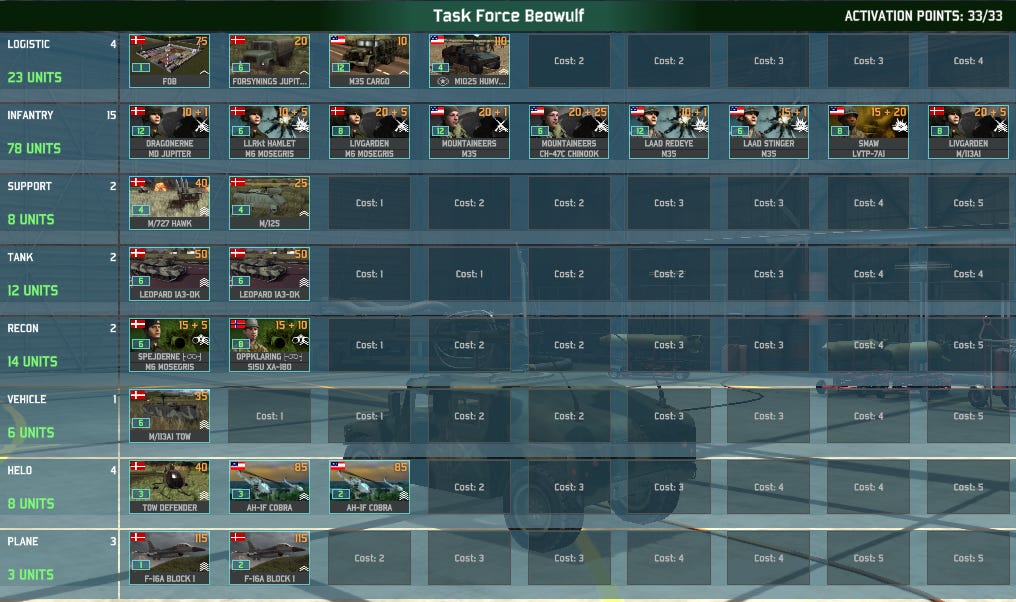
My Beowulf battlegroup consisting of almost two battalions of infantry (1 Dane and 1 American), a heavy dose of anti-air capability supported by American helos and Danish fighter jets are ready to take on a random group of Pact forces. I really don’t know if my deck is balanced or anywhere near historically accurate, but I am going to try to find the best strategy for the deck and for this game by playtesting it at least three times.
Playtest #1
The parameters for my first battle are the following:
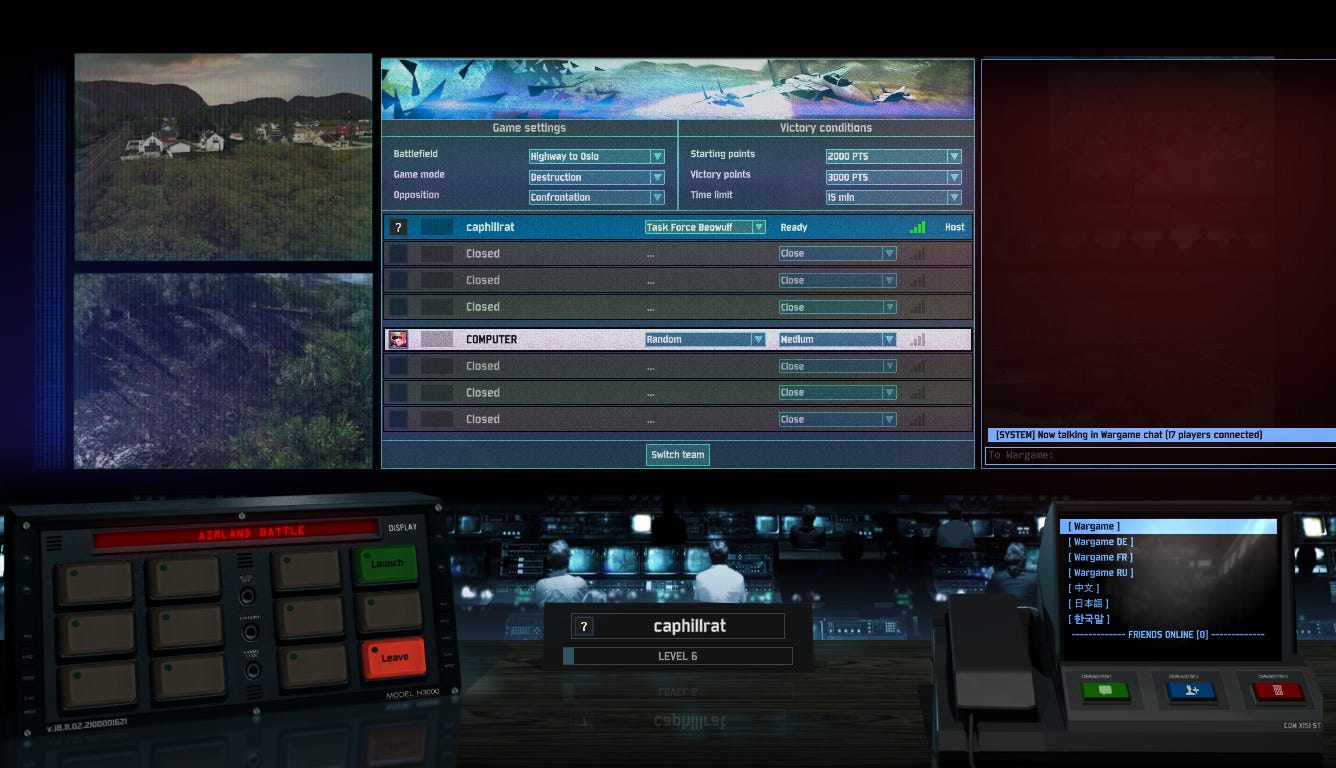
15 minutes of WWIII
Having read Team Yankee by Harold Coyle, Red Storm Rising by Tom Clancy or The Third World War by Sir John Hackett many times, I don’t expect a long lifespan for any unit on my fictional Norwegian battlefield. Consequently, I set up my units in plenty of cover and probe forward under helicopter coverage, hoping to handle any opposing helos and to knock out the Soviet forward-recon elements.
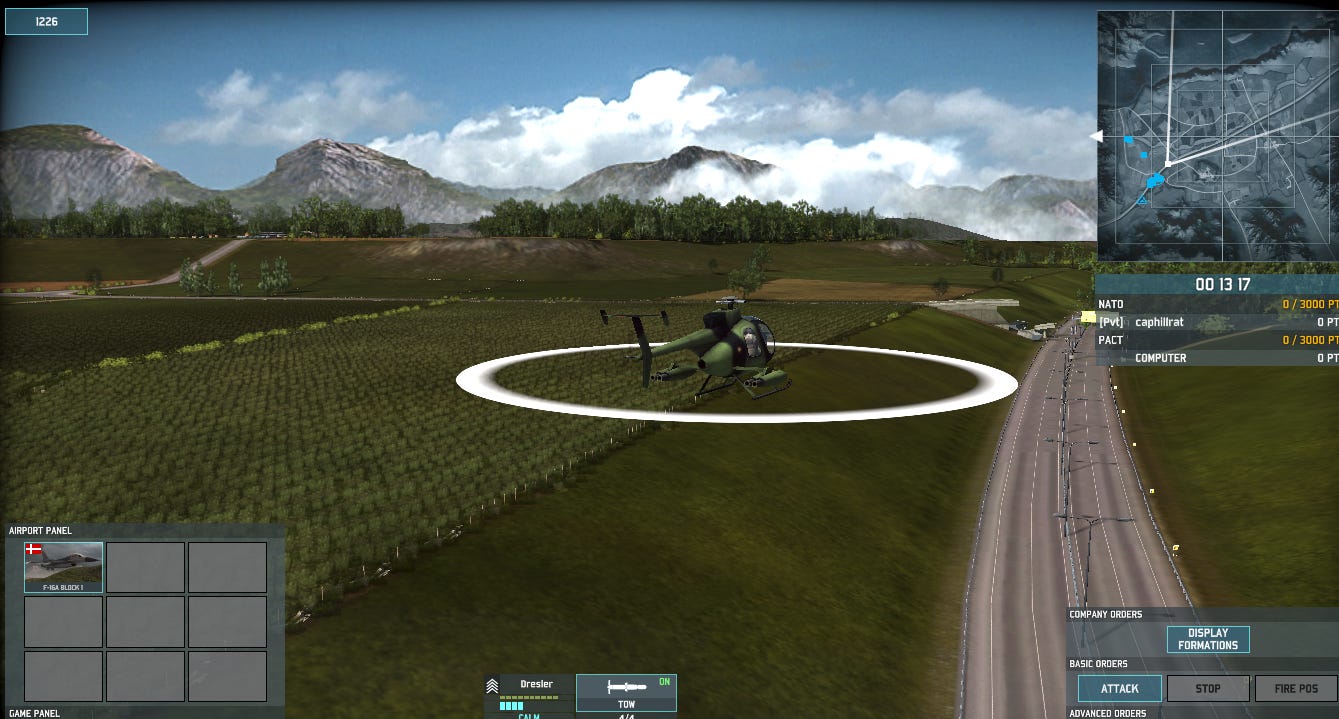
“The tip of the spear for TF Beowulf.”
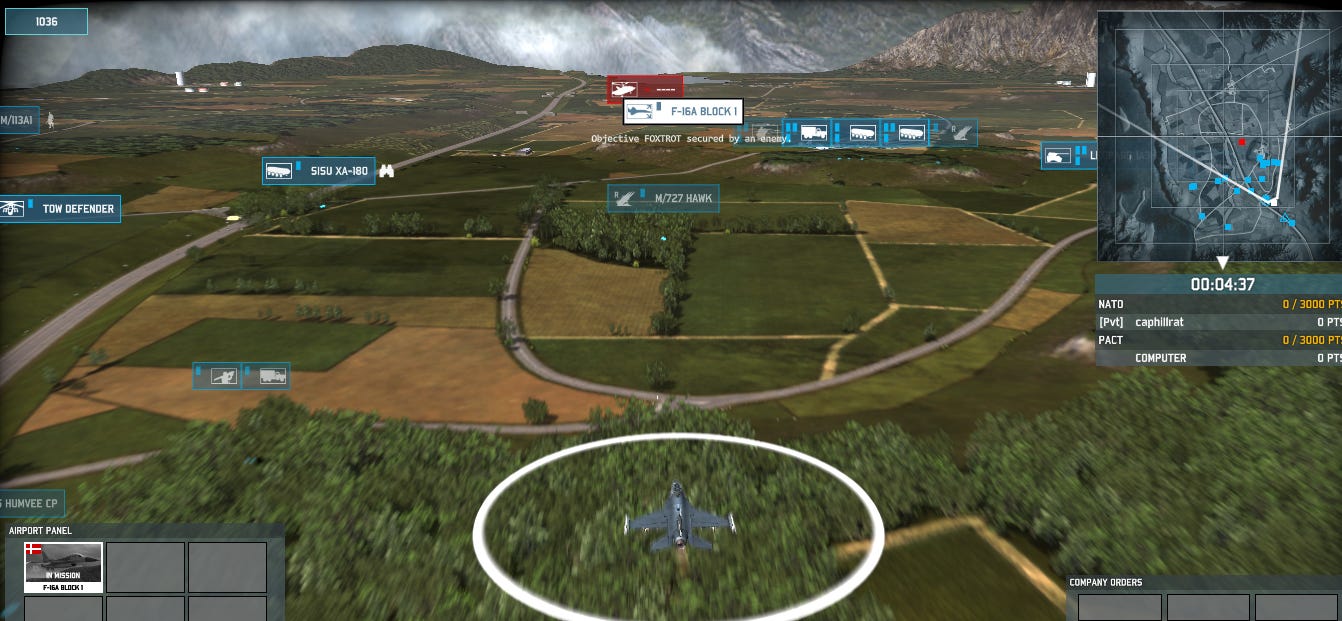
Having established what I think are strong positions along my frontline and plenty of coverage by my recon units, the first casualty to my Danish F-16 is a Soviet recon helicopter.
“First blood.”
However, it took eight minutes (of my 15-minute game) to make contact with Soviet ground forces, (I am more cautious than most) and as you can see from the spacing in between my units, I don’t understand how to maneuver my units forward over this terrain in any realistic way.
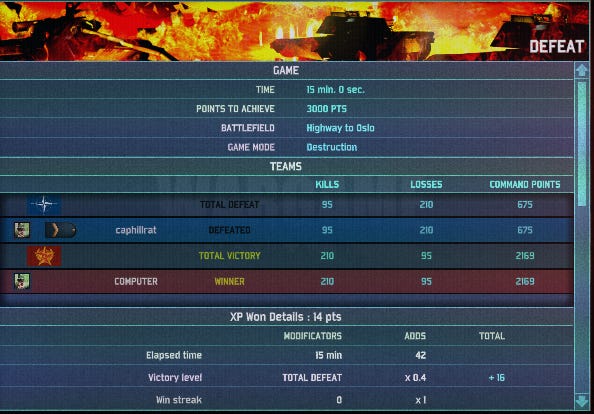
Over the next seven minutes, more compact Soviet forces make mincemeat of TF Beowulf, and at the end of 15 minutes I have suffered a “Total Defeat.”
Playtest #2
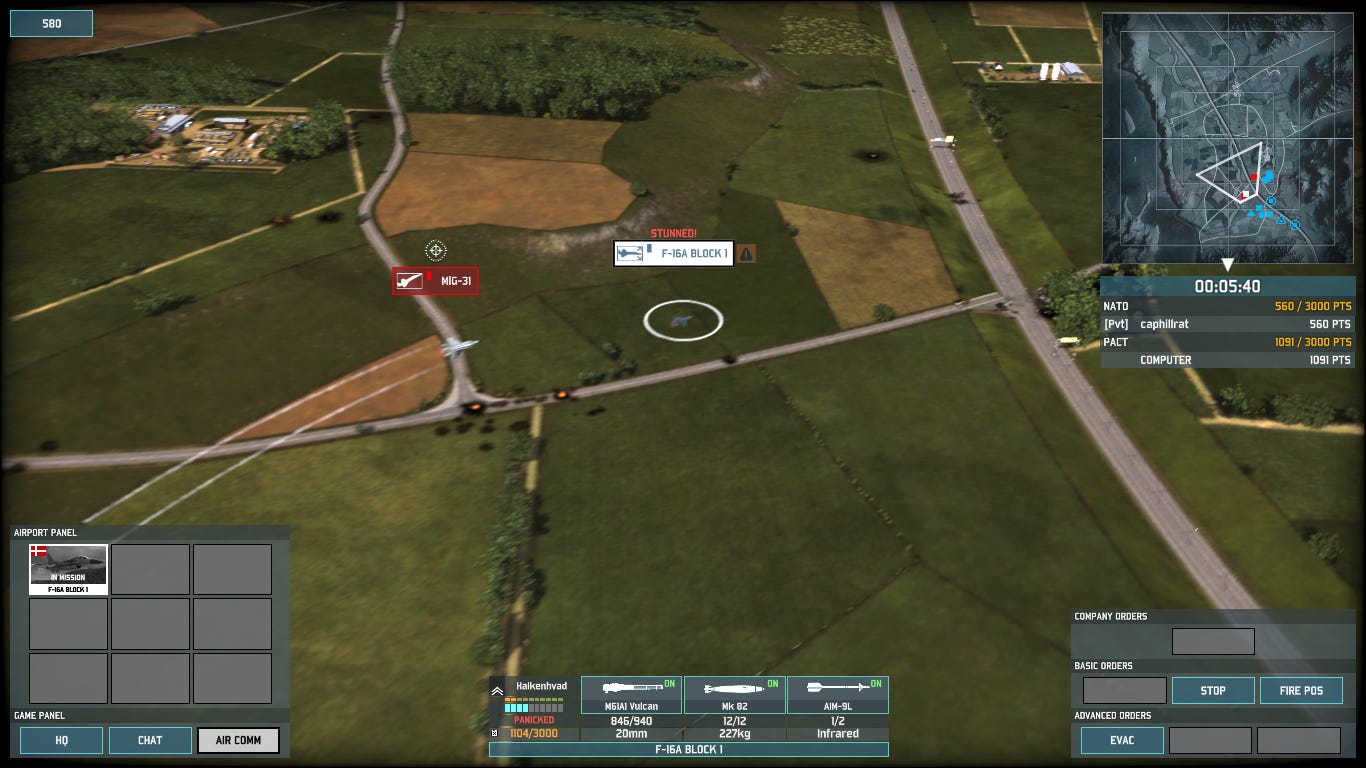
A better defense can sometimes be a good offense. This time I decided to take more of an offensive posture with the enemy. I closed faster, set up an ambush where I caught a column of armor and infantry in the open, but failed in the end I think because I divided my force and because I am beginning to think my battlegroup is inferior to most of my AI opponents.
Playtest #3
In my first two skirmishes, I’ve split my force a number of different ways. For this playtest I am going to group my formation together and advance towards the center of the map.
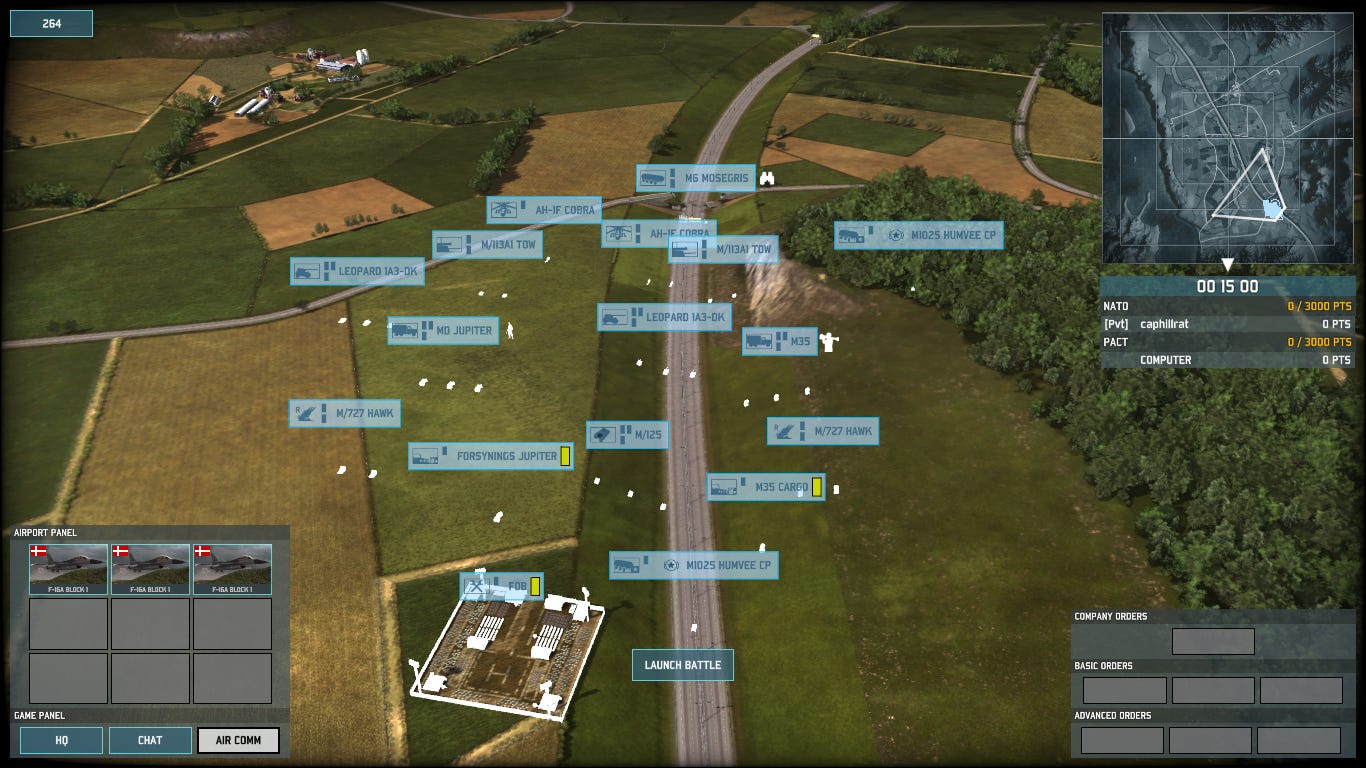
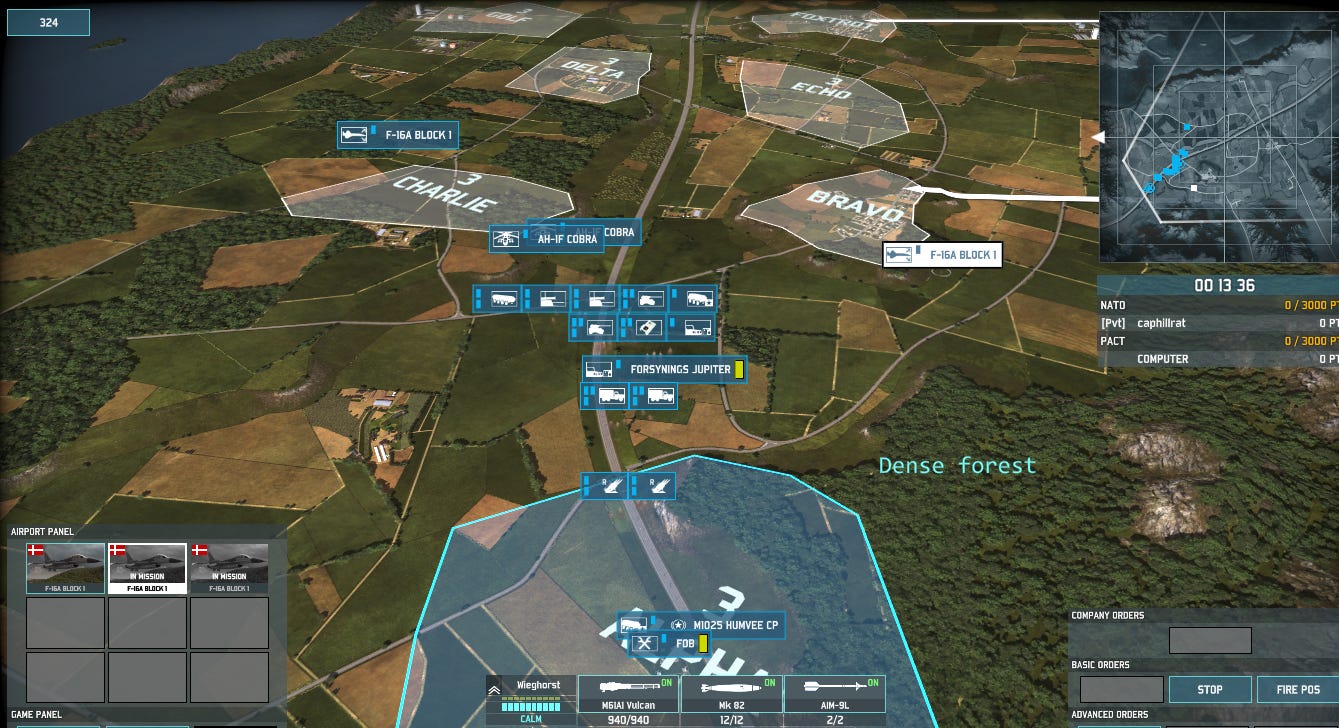
Danish F-16s are up over the battlefield as I advance up the E6 highway towards Oslo. Once I establish a defensive position between the Charlie and Bravo objectives, I am going to place a command vehicle in Bravo, because that will give me more activation points and open a shorter route to the battlefield for reinforcements.
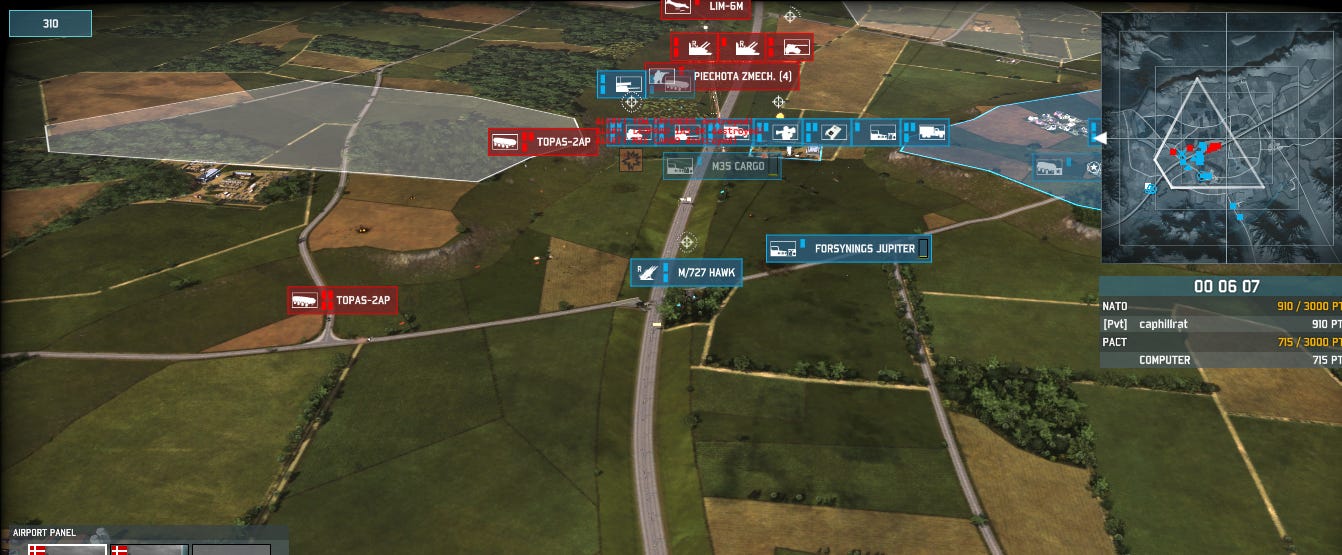
Six minutes into combat and the battle is raging. I have a slight point advantage but the enemy has outflanked me and now occupies the higher ground on my left, placing my Hawk anti-air units in a very vulnerable position.
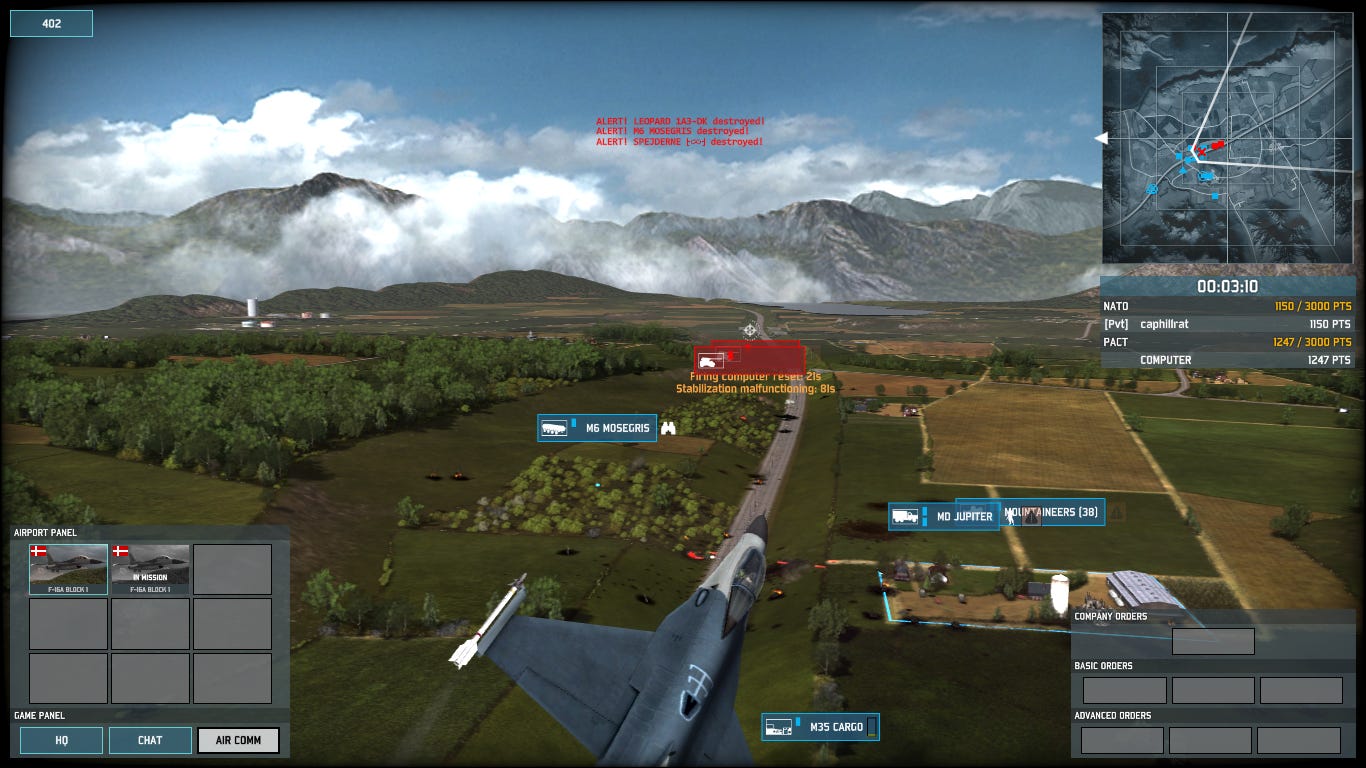
With just over three minutes to go, the F-16s have maintained air superiority and I still have enough of them (one has been shot down) to dominate the battlefield as long as I don’t let the Soviet anti-air units establish themselves.
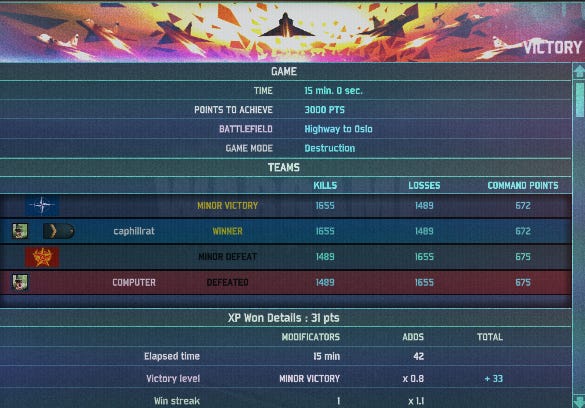
Incredibly I achieve a “minor victory” this skirmish by maintaining a central position on the map and cutting down on the gaps between my unit placement.
Comparing decks
The preset American battlegroup with 35 activation points is the closest deck in that regard to Task Force Beowulf. I want to examine it more closely because during at least two of my skirmishes my infantry-heavy deck felt poorly constructed and often outgunned.
The preset deck invests more into support units (28) and armor units (34) than I did at 8 and 12 respectively.
There are also more helo and air units.
There are fewer infantry units.
My level of training for my deck was higher than the American deck.
Command and supply are about the same.
For my next post, I am going to build a 2.0 version of my Beowulf deck that is more like the American deck to see how it performs.
Thanks for reading.
Chris